DU1-Introduction to geology
DU1-Introduction to geology
10 E to F terms terms
- Earthquake
- A sudden, violent shaking of the ground, often causing a great destruction. It is a result of movements within the Earth's crust or volcanic action

- Eons
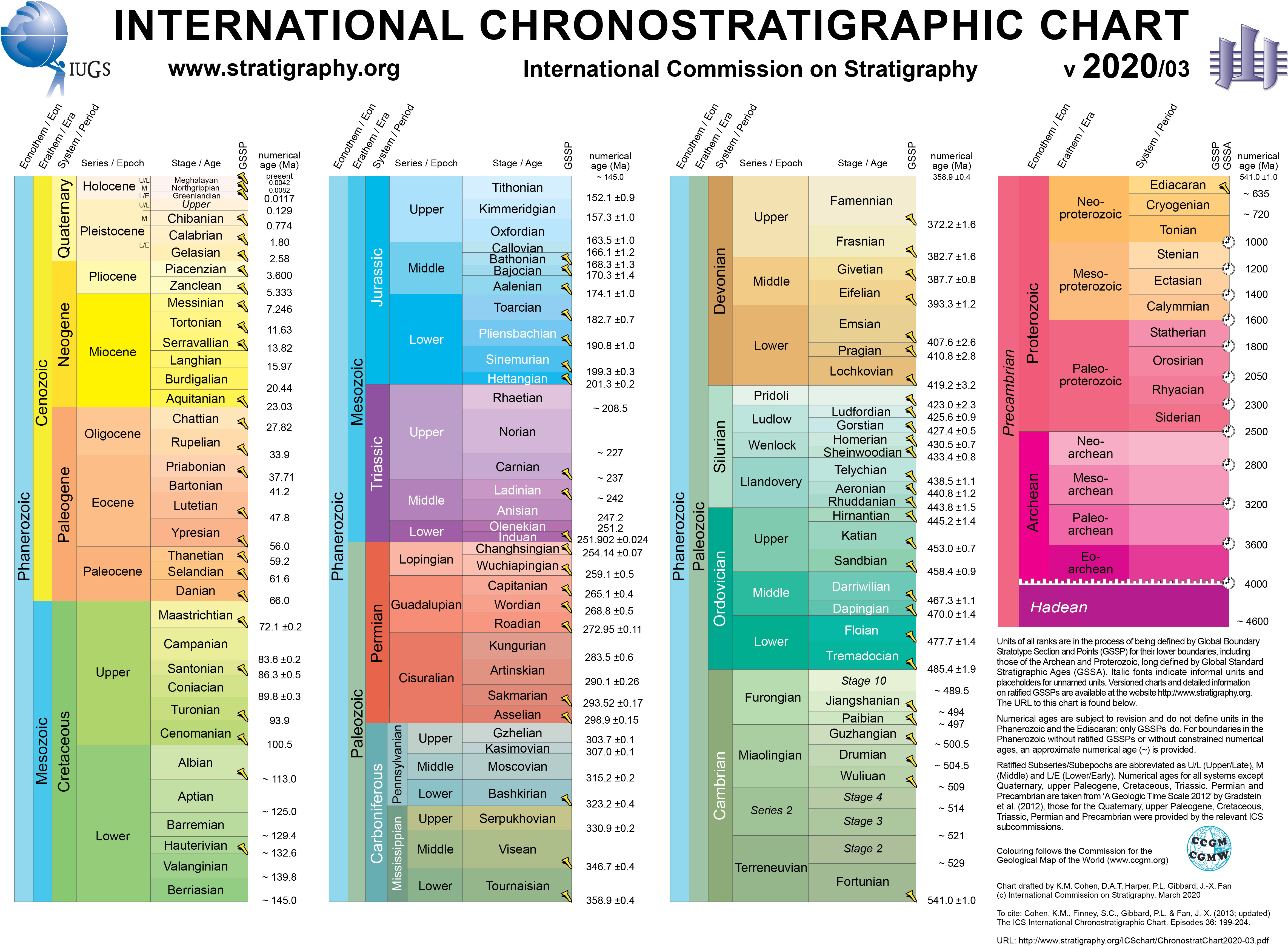
- The largest intervals of geologic time and are hundreds of millions of years in duration. For example: the Phanerozoic Eon is the most recent eon and began more than 500 million years ago.
- Epicenter
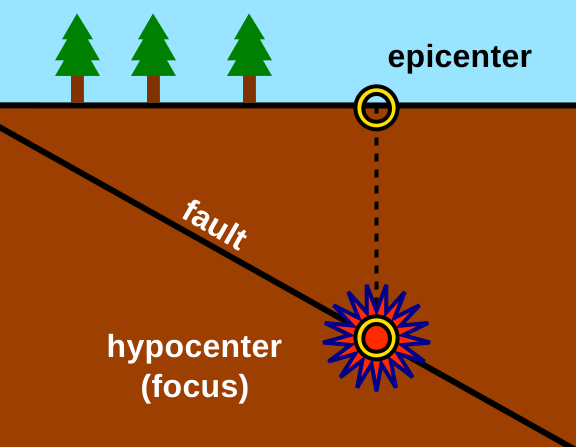
- The part of the Earth's surface directly above the focus (hypocentre) of an earthquake.
- Eras
- Eons are divided into smaller time intervals known as eras. Example: the Phanerozoic is divided into three eras: Paleozoic, Mesozoic and Cenozoic. Very significant events in Earth's history are used to determine the boundaries of the eras (for example: catastrophic extinction).
- Erosion
- A natural process that wears away rock and earth by gravitation, wind, liquid or solid water. The removal and/or breakdown of rocks by physical, chemical or biogenic processes

- Extinctions
- The end of a group of organisms (taxon), usually a species. Mass extinctions refers to the end of large number of taxa in a very short time. This are events due to catastrophic change in the environment.

- Fault
- In geology, a planar or gently curved fracture in the rocks of the Earth’s crust, where compressional or tensional forces cause relative displacement of the rocks on the opposite sides of the fracture - a broken section of the Earth's crust along which movement occurs

- Focus
- Or hypocenter, is the location where the earthquake begins, the origin of the earthquake. The ground ruptures at this spot, then seismic waves radiate outward in all directions.

- Fold
- An area on the Earth´s crust that has been bent due to enormous pressure

- Fossils
- Preserved body remains or moulds, impression, trace of any once-living form in the past geological times, like teeth, bones, shells, exoskeletons, imprints, petrified remains, oil, etc. The process of preservation is called fossilisation and the totality of fossils is known as the fossil record.
